


For a film starring Yash, expectations were never going to be modest. After KGF turned him into one of Indian cinema’s biggest pan-India stars, his next release was always going to be judged against that enormous shadow. Toxic: A Fairy Tale for Grown-Ups arrived in theatres on August 26 with a scale that promised something big, but what happened after the opening has been far more interesting than a simple hit-or-flop conversation.
The film opened strongly, crossing the ₹100 crore mark in India on its first day according to reported trade figures. By Day 6, its India net collection was reported at around ₹220 crore, while the worldwide gross had moved beyond ₹285 crore. Those are substantial numbers. Yet online discussions around the film have remained sharply divided.

A Huge Opening Was Never Going to Be the Whole Story
The first day of Toxic belonged to Yash. Fans had been waiting for his return to the big screen, and the opening reflected that anticipation. It was the kind of start that immediately created comparisons with the biggest releases of recent years.
But a first-day number mainly tells us how much anticipation a film has built. The days that follow tell a different story. Toxic saw a noticeable decline after its opening day, even as the overall total continued to grow. That does not make the film a failure. It simply means that its opening-day excitement has not translated into one completely unified audience response.
And that is where the film becomes more interesting than its collection figures.
Why Are Audiences So Divided?
There seems to be a very clear split in the reaction to Toxic. One side is enjoying the film for exactly what it is trying to be: stylish, aggressive, dark and larger than life. Yash’s screen presence has been one of the most consistently praised parts of the film, and the action and visual presentation have also attracted positive reactions.
The other side has struggled with the film’s writing. Early reactions from audiences and reviewers have repeatedly pointed to the screenplay, pacing, editing and long runtime as major concerns. Some viewers have felt that the film looks impressive but takes too long to arrive at the emotional core of its story.
That distinction matters. People can forgive a weak scene in a big commercial film. They are less forgiving when the entire story feels difficult to connect with.
Yash Is Being Judged Against the KGF Era
There is another reason the reaction has become so intense: Toxic is not being watched in isolation.
For many viewers, Yash is still closely associated with Rocky from KGF. That character became a cultural phenomenon because the films understood exactly how to use his charisma, swagger and mass appeal. So when audiences entered Toxic, many already had an idea of what a Yash blockbuster should feel like.
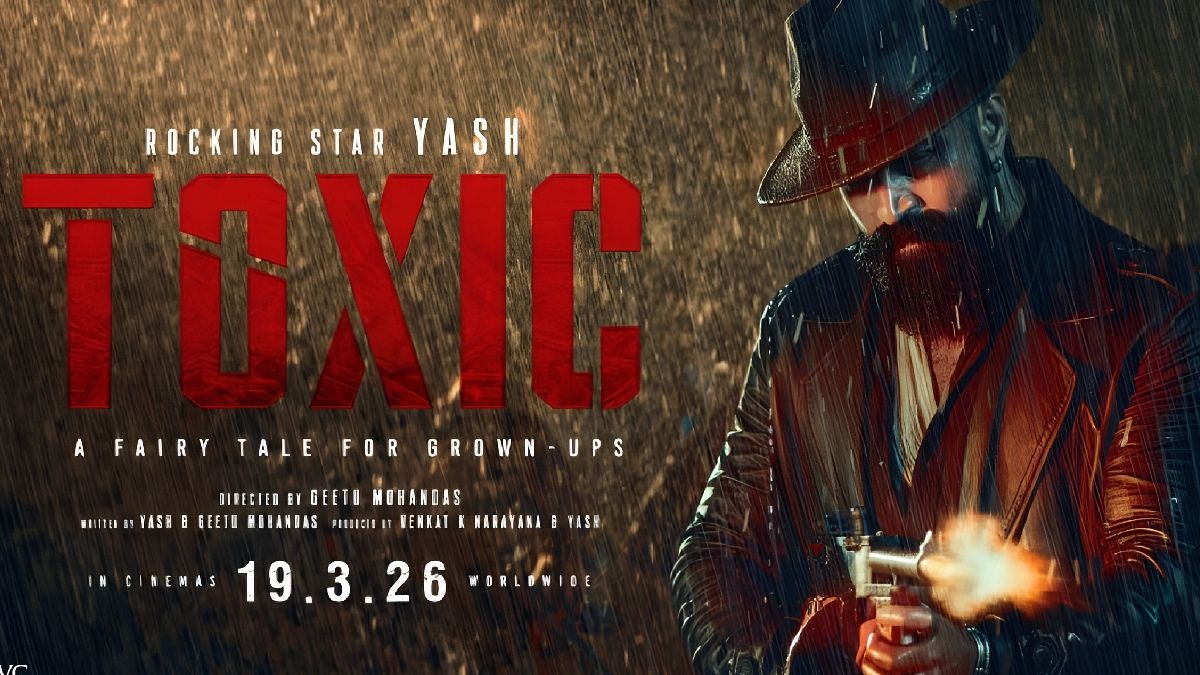
Instead, director Geetu Mohandas has gone for something considerably more stylised and unusual. The film carries a darker atmosphere and a more complicated narrative structure. It is still a commercial action film, but it does not always behave like the conventional superstar vehicle audiences may have expected.
That creative difference may explain why the same scene can work beautifully for one viewer and feel excessive to another.
Geetu Mohandas Chose Risk Over a Safer Formula
One of the most important things about Toxic is the person behind the camera.
Geetu Mohandas is not a filmmaker associated with formula-first commercial cinema. Her body of work has a distinct personality, and bringing that sensibility together with a superstar like Yash was always going to create an unusual combination.
The film appears to embrace that contrast instead of hiding it. It wants spectacle, but it also wants atmosphere. It wants a larger-than-life hero, but it also tries to build a darker and more complex world around him.
The problem is that ambition and execution are not always the same thing. A film can have a bold idea and still leave audiences wishing the screenplay had been tighter.
The Visuals Get Applause, But the Story Has to Carry Them
There is little doubt that Toxic wants to look big. Its production design, costumes, action sequences and atmospheric presentation are clearly designed for the theatrical experience.
That scale has been one of the film’s strongest talking points. Even viewers who did not connect with the story have often acknowledged the effort that has gone into creating its world.
But beautiful frames can only take a movie so far. Eventually, viewers want to understand the people inside those frames. They want the relationships to matter, the choices to carry weight and the emotional moments to land.
For some members of the audience, that emotional connection is where Toxic feels less convincing than its visuals.
The Women in Toxic Have Become Part of the Conversation
The film’s female characters have also attracted discussion, particularly around how much depth they receive in a story dominated by its male lead.
With actors including Kiara Advani, Nayanthara, Huma Qureshi, Tara Sutaria and Rukmini Vasanth, Toxic arrived with a notably strong female cast. That naturally created expectations that these characters would have a substantial role in the world of the film.
Some reactions, however, have questioned whether the writing gives all of them enough room to become fully realised characters. There has also been social-media backlash around an intimate scene involving Rukmini Vasanth, followed by fans defending the actress against what they considered unnecessary trolling.
Then the Review Controversy Changed the Conversation
A film receiving mixed reviews is nothing unusual. What made Toxic more controversial was what happened around the criticism itself.
Before the release, the film’s team obtained an ex parte temporary injunction from a Bengaluru court concerning false, malicious or defamatory content about the movie. After release, a YouTuber publicly shared a legal notice he said he had received over his review.
Reports also emerged about controversy surrounding the visibility of audience ratings on a ticket-booking platform. These developments added another layer to an already heated debate, with questions being raised about where the line should be drawn between protecting a film from false claims and allowing people to express genuine criticism.
That distinction is worth remembering. A negative review is not automatically a malicious attack, just as a positive review is not automatically promotional.

Even the Kannada Film Industry Has Entered the Debate
What has been particularly striking is the support Yash has received from several prominent figures in the Kannada film industry.
Rishab Shetty, Kiccha Sudeep and Upendra have all spoken positively about Yash and the decision to attempt something different. Sudeep later explained that his support was also about standing beside a fellow Kannada actor and supporting Kannada cinema.
That support adds an interesting dimension to the discussion. There is a difference between saying a film is perfect and saying an artist deserves the freedom to take a creative risk.
Toxic may not have produced universal approval, but it has certainly started a conversation about what happens when a superstar chooses experimentation instead of simply repeating the formula that made him famous.
So, Is Toxic a Failure?
Calling Toxic a failure would be far too simple.
The film has already generated a huge theatrical business, attracted significant attention across India and pushed Yash’s name back into the centre of the national entertainment conversation.
At the same time, saying that the film has become the blockbuster everyone expected would also be premature. The drop after the first day and the divided word of mouth suggest that its final run will depend heavily on how the audience conversation develops.
The most accurate description right now is probably this: Toxic is a commercially powerful film that has not produced a universally loved response.
What Toxic Says About Superstar Cinema in 2026
Perhaps the bigger story is not whether Toxic eventually reaches another box-office milestone. It is the pressure placed on stars after a franchise becomes a phenomenon.
Once an actor has delivered a film like KGF, audiences expect the next project to be bigger, louder and more satisfying. But making the safest possible movie can also become creatively limiting.
Yash and Geetu Mohandas appear to have understood that risk. They have made something with a different tone rather than simply creating another version of Rocky.
Whether that experiment completely works is still being debated. But that debate itself is evidence that the film has given audiences something to discuss beyond a familiar commercial formula.
The Real Test for Toxic Has Only Just Started
The opening weekend can create noise. The second week creates a verdict.
If audiences who enjoyed Toxic continue recommending it, the film could turn its strong beginning into a much longer theatrical run. If the criticism around the screenplay and pacing becomes the louder conversation, its impressive opening may eventually look stronger than its overall journey.
For now, one thing is certain: Yash's return has not gone unnoticed.
Toxic has divided audiences, sparked arguments, attracted industry support and turned a movie release into a conversation about stars, filmmakers, criticism and creative risk.
And maybe that is the most revealing part of the whole story. A film does not have to make everyone agree to become one of the most talked-about releases of the year.
Sometimes, the films people argue about the most are the ones they remember the longest.